ABOUT ME
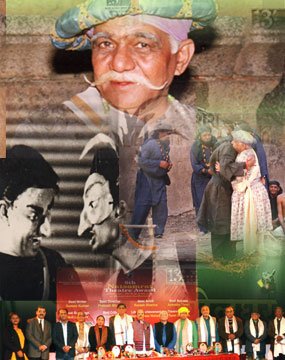
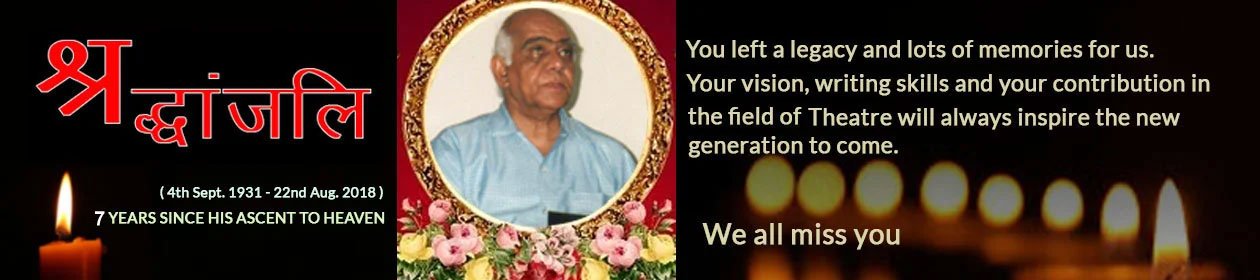
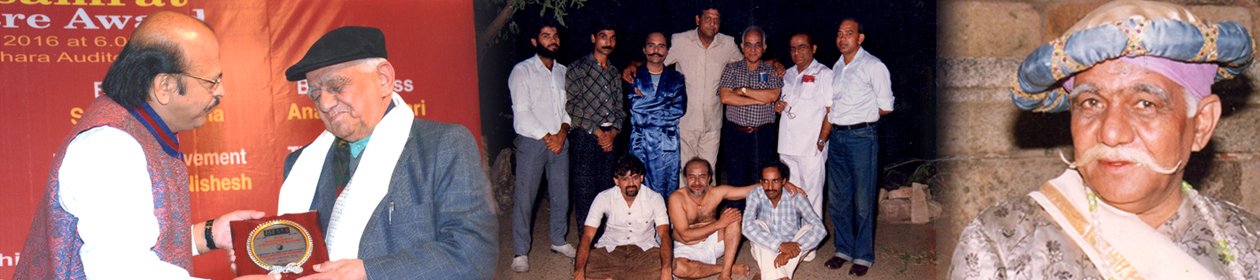
A hindi Playwright and short story writer, Rama Shankar Nishesh started his theatre movement for and with the down trodden of society. His works have featured rikshaw pullers, railway station porters (coolie) and footpath vender. In his search to seek reality he used the downtrodden as actors in his plays. In addition to providing realism, this act developed as sense of pride and belonging in the unrecognized. For once a coolie, a rickshaw puller and a vendor were not invisible but rather stars. Nishesh’s works made a difference in so many people lives one person at a time. He wrote plays based on the common man, acted with them and directed for them. His realistic approach has portrayed a clearer picture of the neglected class of Indian society.
Rama Shankar Nishesh was born in Delhi and brought up in a small village of Uttar Pradesh, Mirapur of Barelly District. He completed Prabhakar (Honors) in Hindi and Sanskrit from Punjab University in 1954. He completed his Bachelor in English from Punjab University in 1956. During his education he was writing short stories, which were published in various magazines. These works established Nishesh in the literary circle as an acclaimed short story writer.
Nishesh started his career writing short stories. His stories professed the seemingly contradictory distinction of being critically acclaimed and popular among readers. His visualization style is still being emulated by young writers today. His style was epitomized in “Gai – Hamari Mata Hai”, a short story that won numerous awards, including much-covered Delhi Public Library’s Best short Story award. The story thereafter got published in Sarita. It is a satire on animal cruelty. Cow, a religious symbol, is revered and worshiped at distance in our society. The story puts a question “Does our behavior in reality justify our commitment?” Here a cow tells her own story. The cow follows a daily routine of being milked in the morning by her master who sells her milk. She further searches for food through the day in trash bins and garbage, returns back in the evening for milking again and finally is tied for the night. On one such particular day cow runs from animal cruelty department (SPCA) workers remembering their earlier atrocities against her. While running she collides with the lamppost. Despite her further efforts to run, she falls and starts to bleed from her head. Not willing to be responsible of an injured animal SPCA workers leave the cow to be tended by her master. The cow’s master realizing the old age and diminishing milking ability of the cow decides to sell her to a slaughterhouse. While the cow is being carted to be slaughterhouse there is procession carried behind the cart. The cries from the cows calf are muffled by the bellows of crowd “Gai hataya band karo , Gai hamari mata hai” (Stop cow killings, cow is our mother). Nishesh ask “Is the slogan just a slogan, or are we serious? If we are serious then for how long will we let the animals suffer?”
Nishesh’s stories gained wide recognition but his interest was leaning more towards theatre. After the end of Parsee theatre, there was no theatre left for the common every lane, every block, railway stations, schools of Old Delhi. He is considered a pioneer of the theatre movement in Delhi. Nishesh joined the social education center run by the Delhi Municipality in the year 1950. The country was undergoing a critical phase of rejoicing independence and suffering anguish of partition. Nishesh presented turmoil faced by refugees who had to leave their ancestral home to the unknown destination. He wrote plays based on social changes and presented them where he could find a venue or corner of any street. These performances were highly acclaimed by critics and well received by audience. He joined the Delhi Public Library (a UNESCO project) as a honorary chairman of drama group, from here he started his own theatre movement and never looked back (1954-1960).
Nishesh feels the change of his interest from story writing to theater was a move towards a more involved form of communication. Play writing provided him to be woven in the intricacies of the society. He was able to share the griefs and joys of his subjects. Nishesh recalls one incident in particular, which strengthen his desire for play writing. Once he presented a play in which a son of a widow was killed in the partition riots. The information was yet to be delivered to the mother. Right before the climatic scene, an elderly woman from the audience came running to the stage. She forcibly held Nishesh and cried “Hun bas kar kaka, hun bas kar. Ab bardhast nahin honda” (Stop, please stop. I can not bear it anymore). She further started crying. Her words had an impact on Nishesh who himself found unable to control his emotions. From his tear filled eyes he looked and found the audience to be moved and crying by the words of the elderly woman. The play was halted as it could not be sustained by the audience any more. The incident made Nishesh focus his energy and writing towards theater.
He joined the National School of Drama (1962) and participated in various school productions like Bichhu (by Moliers) and Gudiya Ghar (Dolls House by Ibsen), under the direction of E. Alkazi. Some of his plays like Bachelors Colony (1960), Duban Vansh Kabir Ka (1970), Parchaayeyan (1970), Laton ke Bhoot (1973) Udghatan (1973) and United Front (1973) received a lot of publicity. He also wrote plays for the All India Radio, Delhi. Udghatan ‘s broadcast on All India Radio (1956) was considered the best play of the season. He has been showered by Allahabad Natya Sangh with a number of awards for his plays that took part in various competitions.
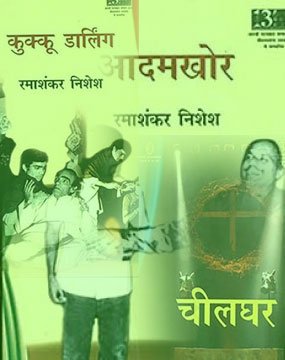
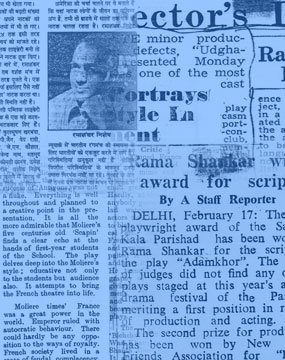
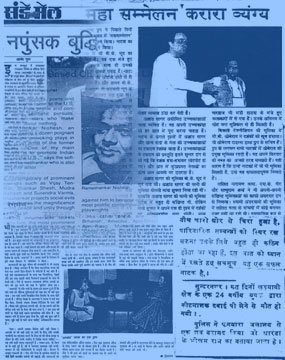
Nishesh’s play writing style evolved through the years. While his earlier plays were more towards confronting the physical abuse of the downtrodden, through the seventies and eighties Nishesh wrote plays delving in the human psyche. Through his writings he analyzed the contemporary reality. Sahitya Kala Parishad, Delhi awarded ‘Best Script Award’ to his play ‘Adamkhor and later he was also awarded “Life Time Achievement Award” by Bharitya Nataya Sangh Delhi. ‘Adamkhor’ (1976) probes the psychology of the different class systems that prevail in any society and their co-dependence upon each other. The play is as true today as it was when it was staged for the first time. It also placed Nishesh on a different platform from thereon. In highly popular ‘Cuckoo Darling’ (1979) Nishesh analyzes the ills of society; exploitation of women, oppression of Harijans (lower caste), low standards of primary education and corrupt teachers. ‘Cheel Ghar’ (1981) is based on sociological theme of effects of transformation of individual prioritized in the wake of materialism. ‘Maha Sammelan’ (1981). The play presents a real picture of an election cycle. A politician to achieve success peddles an idea of a “Maha Sammelan”. him. They end up killing the common man. “Pyar kaise hota hai” deals with trust in a marriage.
A man starts to suspect and distrust his wife after finding old love letters addressed to his wife from a stranger. The distrust destroys the marriage. The couple gets back together after the husband realizes that the letters were written prior to their marriage and his wife have been always faithful to him. The intricacies of this delicate theme were dealt in a proficient manner. ‘Kotha’ (1984) tackles the plight of Indian woman in the theme of arranged marriages. The play questions the convention that bind Indian woman. ‘Apbrhansh’ (1985) is a story of a family in which the mother leaves her husband and daughter to lead a more glamorous life. She returns later in life and find that her husband and daughter have prospered. Seeing their fulfilled lives she begs that question of return to family. The daughter fails to accept her as her mother and plays leaves the question of her return hanging. ‘Ameoba’ (1986) depicts the circle of poverty in slums. Generations are lost to poverty and violence. The play asks that despite our accomplishment as a society and advanced human beings, will we be able to eradicate the slums and provide a decent standard of living for all. How long will the violence poverty consume our society? ‘Memo Bai’ (1986) tells a story of a widowed mother (Memo) who lives with her brother. Though seemingly caring the brother true intentions to keep her sister is so that she can care for the brother’s bed-ridden wife, do house work and swindle her out of her share of their ancestral property. Memo’s brother disrespects her at every opportunity particularly in matters of finance. There comes a time when Memo cannot take the torments anymore and seeks a job with the help of childhood friend. After becoming financially secure she provides schooling for her child and assets her rights over her portion of the property. The play provides a window in the society’s treatment of women.
According to Nishesh credit of his works goes to all those people who somehow touched his life. Nishesh reveres each individual’s unique view of life. He tries to understand the life experiences of others and transform those experiences plays and stories which move us all. His plays were not written in a traditional study room or by the side of a river, but on a street side or at a tea stall (Khokhas). This is the reason that he could portray the real essence of life in his plays.
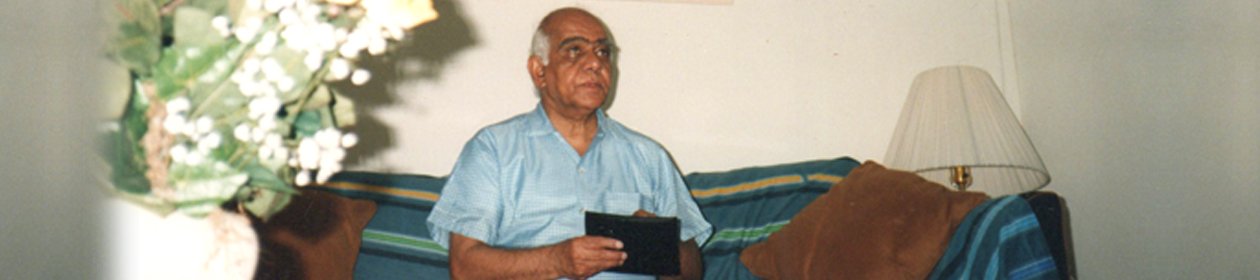
Nishesh is currently settled in New York (U.S.A). His journey is still continual; his love for his motherland is still the same. He is involved in various ongoing projects. He continues to learn and expand his horizons. He has recently taken up script writing for television and films in addition to his ever-growing portfolio of plays and stories. His first experience with script writing started when his play ‘Amoeba’ was produced into a short telefilm. He recently wrote 13 episodes of a television serial ‘Aur kissan Jag Utha’(1996) produced and aired on Doordarshan. He also wrote a script for a documentary film Piece of Peace’. The documentary is about a man who has traveled around the world on his bicycle for 15 years, to accomplish his mission of world peace. This film was telecast on channel 75 in New York. He also wrote a script for short motion pictures ‘Cockroach’ (1999) which portrays the inner conflict of a woman and Antar Dwand(2000) a short film he wrote about a writer who decided to settle abroad and feels handicap in expressing himself in another continent. He has also recently published Chanikayen (2001) a book written on moments of life.